5 Overlooked Forklift Safety Risks That Could Be Costing You
Mike O'Donnell
May 30, 2025
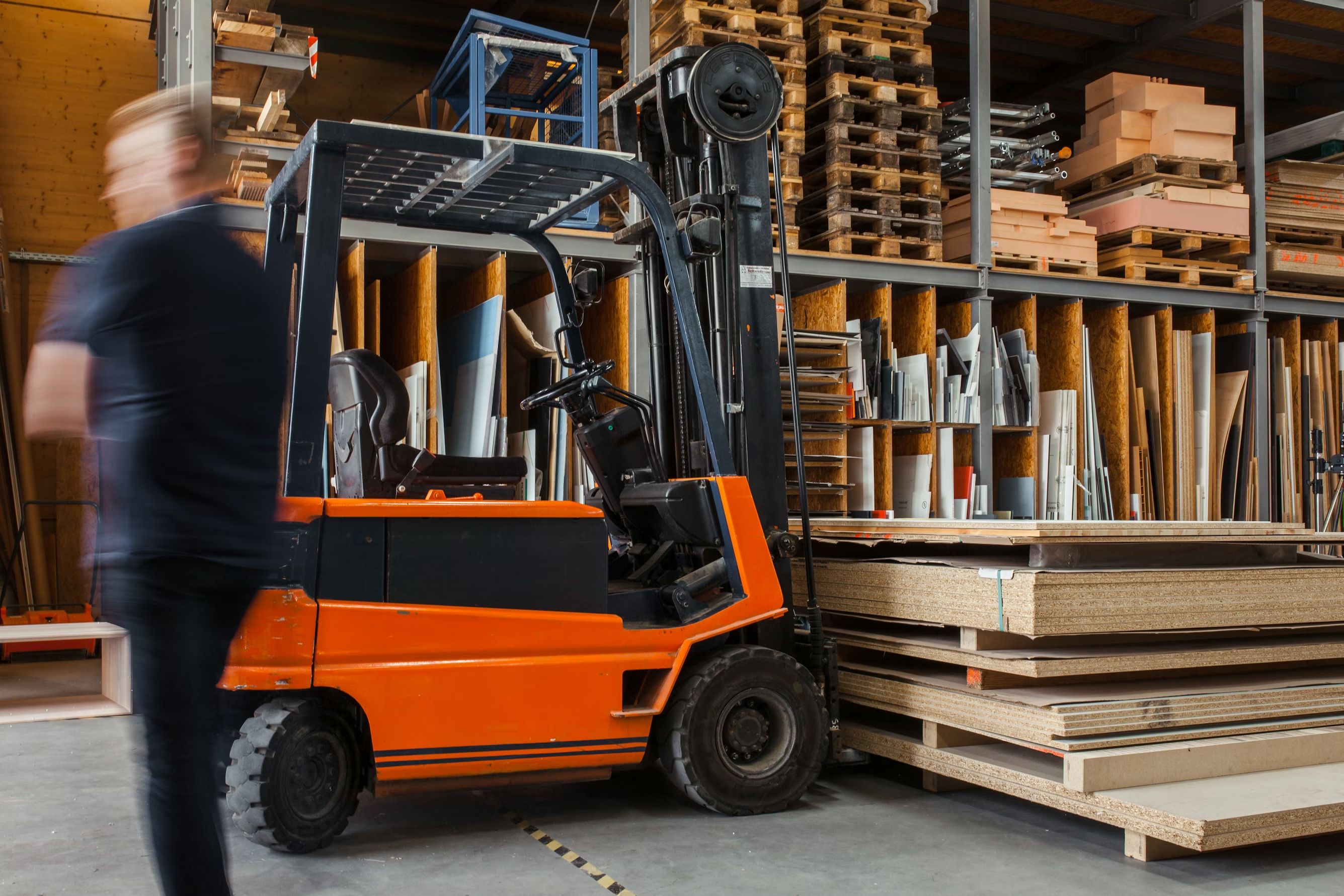
In the world of warehouse operations, distribution centers and manufacturing plants across Ohio and the US, forklifts are a daily necessity. But while these powerful machines keep supply chains moving, they also present significant safety risks if not handled with care. And despite OSHA training requirements and internal protocols, some of the most critical forklift safety issues are still being overlooked—even by experienced operators.
If your facility operates forklifts, it’s time to look beyond the basics. With over 20 years training organizations on safety standards and compliance including forklift safety, we’ve developed best practices to address critical issues. These five commonly neglected areas are among the top causes of preventable accidents, equipment damage, and costly downtime.
1. Skipping or Rushing Through Pre-Use Inspections
Too often, forklift operators see daily inspections as a formality rather than a vital safety step. But these pre-shift checks are the first line of defense against mechanical failures.
Commonly missed issues include:
- Worn or cracked forks
- Leaking hydraulics
- Low tire pressure
- Inoperative lights or horns
A missed issue can quickly escalate to a serious incident, like a load shift, tip-over, or collision. During our on-site forklift training programs, we’ve found that even experienced operators benefit from reinforcement of what to look for, how to document it, and when to report a concern. Last summer, a client of ours was facing the potential of multiple OSHA citations stemming from an incident involving a forklift seriously damaging a trailer floor. The resulting investigation uncovered that safety features on the forklift (lights, seatbelt, horn, etc.) were in disrepair and that inspections and training requirements were not met by the company. In addition to repairs to the forklift and the trailer, the company had to address training deficiencies in order to mitigate the cost of the pending citations.
2. Complacency from “Experienced” Operators
It’s a familiar story: a seasoned operator starts cutting corners, skipping protocols, or driving too fast simply because they’ve “never had a problem before.”
The reality? Complacency is one of the biggest hidden threats on warehouse floors.
Speeding through turns, lifting unstable loads, or skipping seatbelt use may seem minor—until they result in injury or damage. Our trainers regularly work with organizations to refresh and retrain veteran employees, not just new hires. Safety isn’t about experience—it’s about consistency.
3. Improper Load Handling
Forklifts are designed to carry specific types of loads under specific conditions. Yet improper loading is one of the leading causes of tip-overs and product damage.
Watch out for:
- Loads stacked too high or unevenly
- Loading beyond capacity
- Lifting off-center or without stabilizing the load
- Using attachments incorrectly or without proper training
We have worked in many fast-paced production and distribution facilities in Ohio and the US. And while shortcuts with load handling may save time in the moment—the long-term cost can be enormous. Proper training on load distribution and forklift capacity limits is essential.
4. Neglecting Pedestrian Safety and Communication
Warehouses and material handling areas aren’t just full of machines—they’re full of people. And poor communication between operators and pedestrians is a recipe for disaster.
Blind spots, tight corners, and congested aisles make forklift-pedestrian interaction a top hazard.
Key areas to improve:
- Operator use of horns at intersections
- Clear pedestrian walkways and barriers
- Making eye contact with nearby workers before moving
- Adding convex mirrors or backup alarms to increase visibility
In our work with facilities, we’ve found that “shared space” safety is one of the most under-addressed training needs. It takes both operators and pedestrians to prevent collisions.
5. Overlooking Changing Surface Conditions
Forklifts perform differently on smooth concrete than they do on ramps, dock plates, or wet floors. Yet many operators don’t adjust their driving for changing surfaces.
Risk factors include:
- Slippery warehouse entries (especially during Ohio winters)
- Dusty or oily spots that reduce traction
- Cracked or uneven flooring
- Loading docks with elevation changes
Teams must be trained to recognize surface changes and drive accordingly. Slow speeds, wider turns, and attention to the load center of gravity can prevent loss of control and tip-overs.
Make Forklift Safety an Ongoing Conversation
At SCT Operations, we provide OSHA-compliant forklift training and site-specific safety programs throughout Ohio, including Cleveland, Akron, Canton and Youngstown—as well as surrounding regions including Pennsylvania, Indiana and Michigan.
Our hands-on training programs with forklift training in Ohio and beyond are designed to go above check-the-box compliance and focus on real-world risks your team faces every day. Whether it’s retraining experienced operators, conducting safety audits, or refreshing your inspection procedures, we’re here to help you build a stronger safety culture from the ground up.

.png?width=352&name=Construction%20Safety%20%20(1200%20x%20630%20px).png)