The Future of Safety in Manufacturing: How Technology Is Changing the Job and the Skills of Safety Leaders
Dragan Savic
November 19, 2025
I’ve been in and around manufacturing long enough to see incredible progress: machines that think, sensors that predict, and systems that practically run themselves. The technology is exciting. But the truth is, the pace of change is outpacing the way many organizations manage safety.
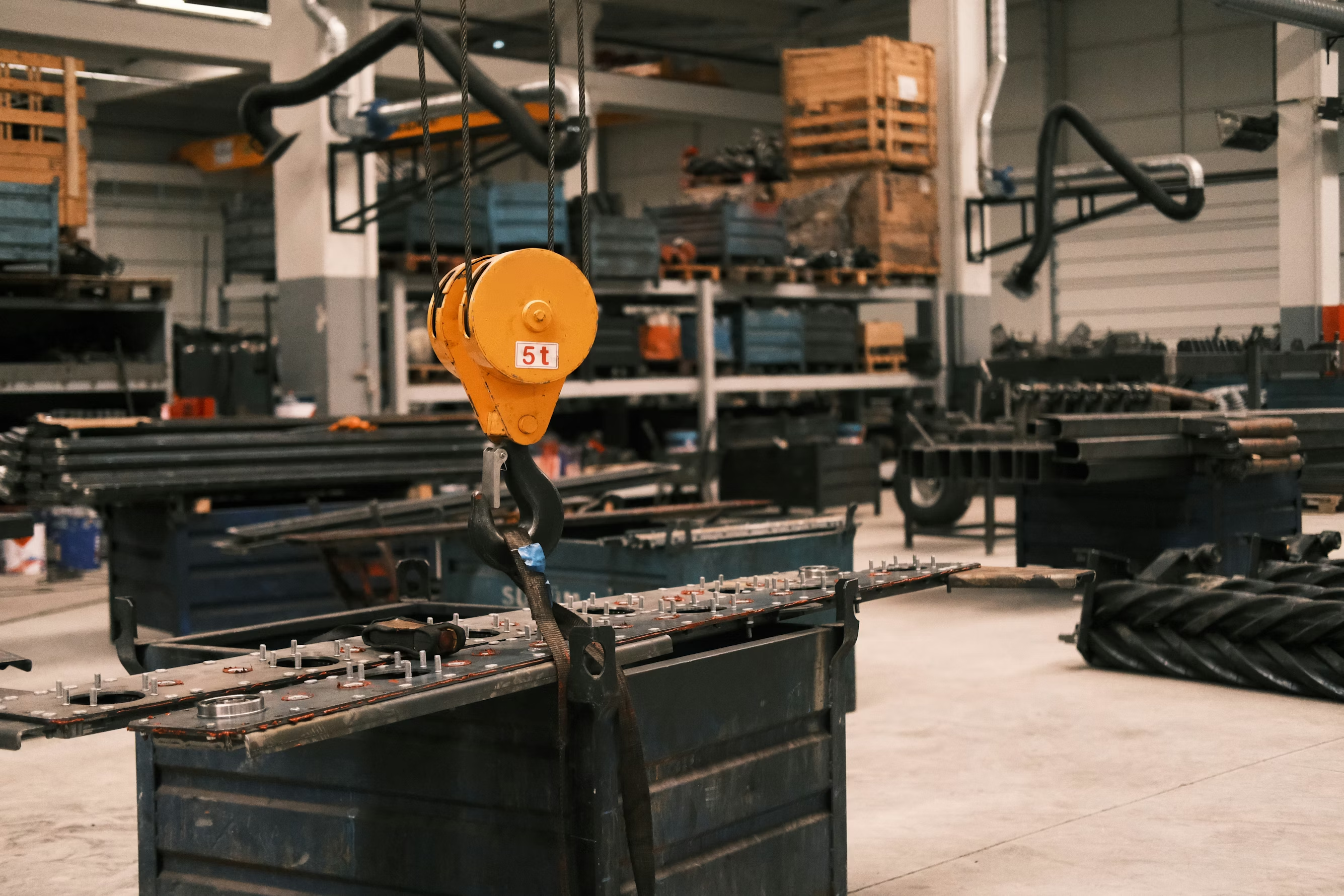
I have had the pleasure of visiting many plants that have invested in cutting-edge automation. Robots moving materials, sensors tracking production, and manufacturing floors running with impressive precision. What caught my attention wasn’t just the technology, it was how the people were working with it. The same crews who once focused on guarding and manual handling were now operating alongside machines that made their own decisions. The safety program hadn’t changed much, but the work had. The hazards hadn’t gone away; they’d simply evolved.
According to the Bureau of Labor Statistics, injury and illness rates in manufacturing dropped nearly ten percent in 2023. That’s a good sign that progress is being made. But if you talk to safety professionals on the floor, many will tell you that while traditional injuries may be declining, new ones are emerging. Things like contact injuries around automated systems, ergonomic issues from more stationary work, even risks tied to fatigue and distraction as digital tools multiply. The data tells one story, but what I see every day tells another.
We’ve worked alongside machines and automation for decades. That’s nothing new. What’s changing now is the level of intelligence built into those systems. Today’s equipment isn’t just operating. It learns, senses, and reacts. With AI, data integration, and advanced connectivity, the work environment is becoming more dynamic and less predictable. The familiar risks are still there, but they’re now joined by new forms of people-machine interaction that we’re all still learning how to manage.
This is where the safety profession is shifting. We can’t just enforce rules and regulations anymore. We have to understand the systems that shape behavior and risk. In many cases, that means working alongside IT, engineering, and operations leaders to anticipate how automation, AI, or analytics will change the work environment before an incident happens. The role has become part safety expert, part translator, and part strategist.
For plant and operations leaders, the opportunity is clear. Review your automation roadmap and look closely at where people and technology intersect. Use the data you already have—near misses, downtime logs, maintenance reports—to look for patterns instead of just counting events. And most importantly, invest in your people. The best technology in the world won’t make a plant safer if your teams don’t understand how to recognize and respond to the new types of risk it brings.
Innovation doesn’t just mean faster or smarter production. It means safer, more resilient operations that protect the workers who make it all possible. The future of manufacturing depends on how well we align safety with the way we build, design, and think about technology. That future is already here, and it’s our job to keep up.
Interested in taking your manufacturing plant to the next level with the right safety mechanisms in place? We are here to help!

.png?width=352&name=Construction%20Safety%20%20(1200%20x%20630%20px).png)